Water Pressure Problems: Causes and Solutions for Your Home
Is your shower a trickle one day and a firehose the next? Maybe your kitchen tap sputters or your business’s restroom struggles to keep up. Water pressure problems can turn a normal day upside down. They waste time, cause stress, and sometimes hint at bigger trouble lurking below the surface.
At Monty's Plumbing, we’ve seen it all—burst pipes at midnight, silent leaks, and even the occasional geyser. We know how sudden water pressure swings can disrupt both homes and businesses. Let’s break down what’s normal, what’s not, and the safest way to get things flowing smoothly again.
What Is Normal Water Pressure—And What’s a Red Flag?
Water pressure is like the heartbeat of your plumbing system. Too low, and daily routines become frustrating. Too high, and your pipes and appliances are under constant attack.
Normal water pressure:
- For most homes and small businesses: 40–60 psi (pounds per square inch)
- Anything below 30 psi? Annoying and often a sign of trouble.
- Over 80 psi? Code violation in many areas (see your local plumbing code). This can damage fixtures and void warranties.
Signs of Water Pressure Issues 🚨
Watch for these warning signs:
- Showers, sinks, or toilets that fill slowly
- Sudden drops in pressure when multiple fixtures run
- Noisy pipes (banging or whistling)
- Water hammer (that loud thud when shutting off a tap)
- Appliances like dishwashers or washing machines taking longer than usual
- Sprinklers that barely spray
If you’re running a business—especially a restaurant or rental property—these problems can mean lost customers or health code issues.
Quick Safety Checklist
Before you start poking around, keep safety in mind.
- Turn off electrical appliances near wet areas.
- Know where your main shut-off valve is.
- Don’t touch hot water lines right after use.
- If you smell gas, evacuate and call for help.
- For commercial settings, check OSHA and local safety guidelines.
DIY Troubleshooting: What You Can Try First
Some pressure hiccups are simple to solve. Here’s a quick list:
- Clean faucet aerators and showerheads. Mineral buildup is a classic culprit.
- Check for visible leaks. Look under sinks, behind toilets, and around your water heater.
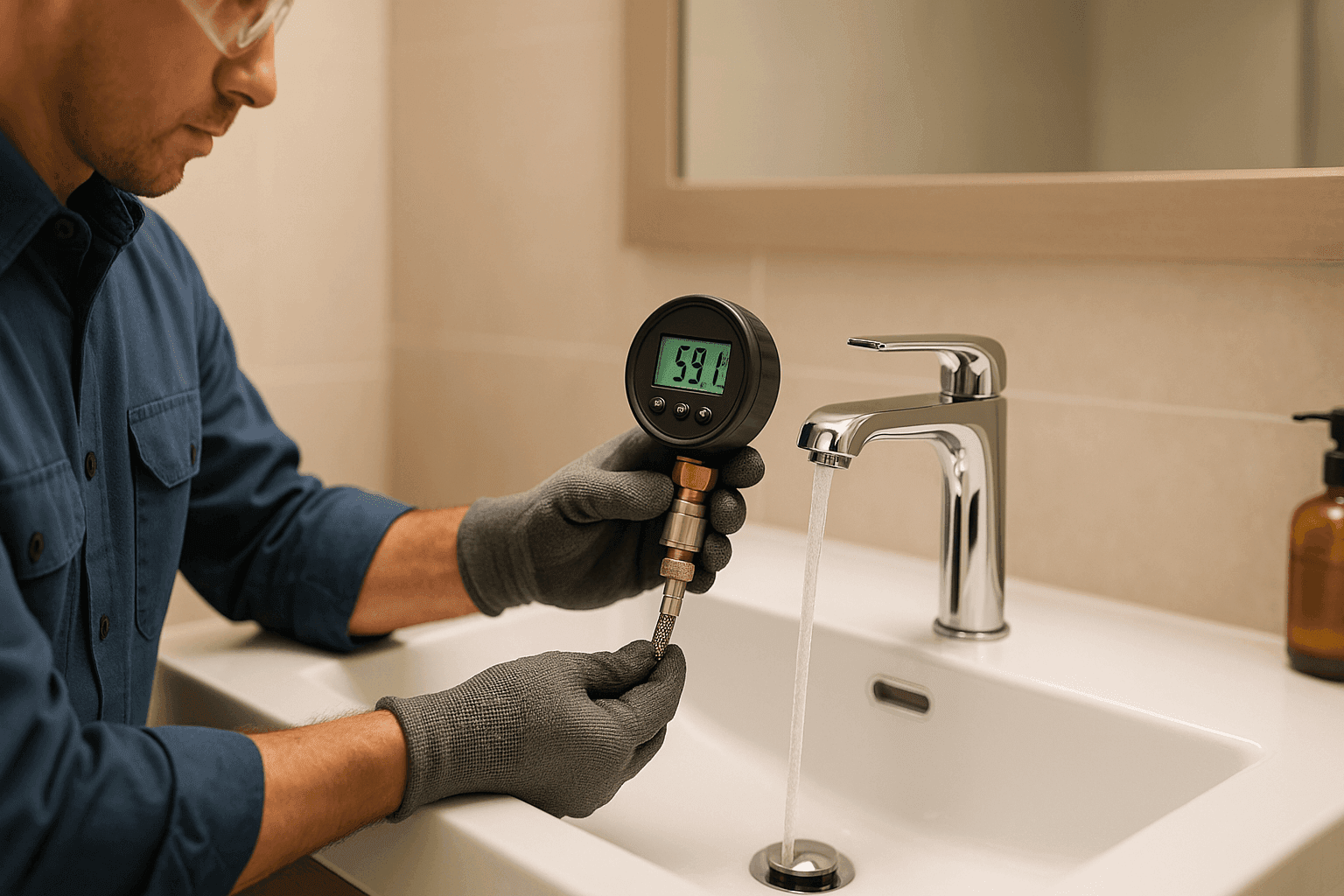
- Test a pressure gauge. Hardware stores carry affordable gauges—attach one to an outside spigot.
- Ask neighbors. If their pressure is low too, it could be a municipal supply issue.
- Inspect shut-off valves. Sometimes, a valve isn’t fully open after repairs.
Still struggling? That means the roots may run deeper.
When to Call a Pro (and Why It Matters)
Some problems hide where you can’t see. A sudden drop in pressure might seem minor—but it could be the tip of the iceberg.
Common hidden causes:
- Pipe leaks. Even a tiny crack can bleed pressure and cause water damage.
- Municipal supply issues. Construction or water main breaks can drop pressure for the whole block.
- Failed pressure regulator. This small device protects your fixtures from surges.
- Corroded or clogged pipes. Old galvanized pipes? These clog over time, especially in older homes.
Ignoring these is like ignoring a car’s check engine light. What starts as an annoyance can quickly become an emergency plumbing call.
What Monty’s Plumbing Does on Arrival
When you call Monty's, we show up ready. Here’s what to expect:
- Precision diagnostics. We use digital pressure gauges and thermal cameras to find leaks and pressure loss—even behind walls.
- Visual inspection. We check all visible pipes, joints, valves, and fixtures.
- System tests. We’ll isolate sections to pinpoint if the problem is local or system-wide.
- Regulator checks. Pressure reducing valves get tested and adjusted or replaced if needed.
- Municipal supply coordination. If it’s a city issue, we’ll help you document the problem and guide next steps.
Our goal is simple: Fix it right, with minimal disruption.
Risks of Ignoring Water Pressure Problems
A leaky faucet might seem harmless. But unchecked pressure swings can:
- Shorten the lifespan of water heaters, dishwashers, and boilers
- Cause hidden mold and rot
- Lead to pipe bursts—especially in winter
- Create backflow risks (where dirty water flows into clean lines)
- Violate local plumbing codes (which can affect insurance claims)
For businesses, these risks multiply: equipment downtime, failed health inspections, and unhappy tenants or customers.
Prevention & Maintenance: How to Avoid the Next Pressure Problem
Just like changing oil keeps your car running, regular plumbing checks keep pressure steady.
- Annual pressure checkups. Especially before winter or peak business seasons.
- Flush water heaters. Sediment buildup can choke flow.
- Inspect pressure regulators. Replace every 5–10 years, or as recommended by the manufacturer.
- Look for slow drains or stains. These can hint at hidden leaks or pressure imbalances.
- Backflow prevention devices. Test annually if you have them (per local code).
Monty's Plumbing offers scheduled preventative maintenance for both homes and small businesses. We keep you ahead of the curve.
Upgrading Your System: When It’s Time
Sometimes, repairs only go so far. If your property has:
- Repeated leaks or pressure swings
- Old galvanized or polybutylene pipes
- Multiple appliance issues
…it may be time for a modern upgrade. Repiping, water filtration systems, or a new pressure regulator bring peace of mind—and may even lower your utility bills.
For commercial properties, upgrades mean fewer complaints and smoother operations.
Costs & Time Factors: What to Expect
Plumbing repairs vary. Here’s what can affect price and timing:
- Diagnosis: Quick for accessible issues, longer for hidden leaks
- Parts: Regulators, pipes, or fixtures may need replacing
- Labor: Emergency plumbing calls (nights/weekends) often cost more
- Building type: Commercial buildings or multi-family units can be more complex
Most pressure fixes, from regulator swaps to pipe repairs, take a few hours. Full repiping or major upgrades may require a day or more.
When It’s an Emergency
Some situations can’t wait:
- Sudden, total loss of pressure (could mean a burst main)
- Water pouring from ceilings, walls, or floors
- Gas smells near water heaters or boilers
- Toilet backups or flooding
In these cases, shut off your main water supply and call Monty's Plumbing for emergency plumbing—anytime, day or night.
FAQ: Common Water Pressure Questions
How do I know if my pressure is too high or too low?
A simple gauge on an outdoor spigot gives a quick answer. For most, 40–60 psi is ideal.
Is high water pressure dangerous?
Yes. It wears out pipes, appliances, and can even cause leaks. Local plumbing code usually sets a max at 80 psi.
Can I fix low pressure myself?
Start with cleaning aerators and checking for leaks. For anything major—like pipe leaks or failed regulators—call a plumber.
My business has recurring pressure problems. Why?
Commercial plumbing systems see more use and stress. Age, corrosion, or improper sizing may require upgrades or regular maintenance.
Local and Seasonal Considerations
Pressure problems spike in certain seasons:
- Winter: Freezing temps crack pipes, lowering pressure or causing bursts.
- Spring: Thaw cycles can reveal leaks that went unnoticed.
- Heavy rain seasons: Can overload sewer lines and reduce water supply pressure.
If your building is older or your business runs equipment that uses lots of water, regular checks are even more important.
Take the Pressure Off—Get Plumbing That Flows
Water pressure issues can slow down your life—or your business—fast. Don’t let hidden leaks or failing regulators snowball into bigger headaches. If you need Sink Repair near you, help with water pressure, or reliable emergency plumbing, Monty’s Plumbing is here.
Call Monty's Plumbing now — or reach us anytime at 844-484-5484 .